Whether you’re guiding a startup, restructuring a team, or scaling a culture, here’s what modern leadership demands:
- clarity of vision,
- consistency of action, and
- the humility to serve before you lead.
In 2025, leadership is less about authority and more about influence. The pace of change, the rise of hybrid teams, and shifting expectations around purpose are rewriting what it means to lead well.
In this issue, we return to the foundations: What leadership truly is, and how to practise it with head, heart, and hands.
What Do We Mean by Leadership in 2025?
Leadership is not a title. It’s not charisma. It’s not even authority.
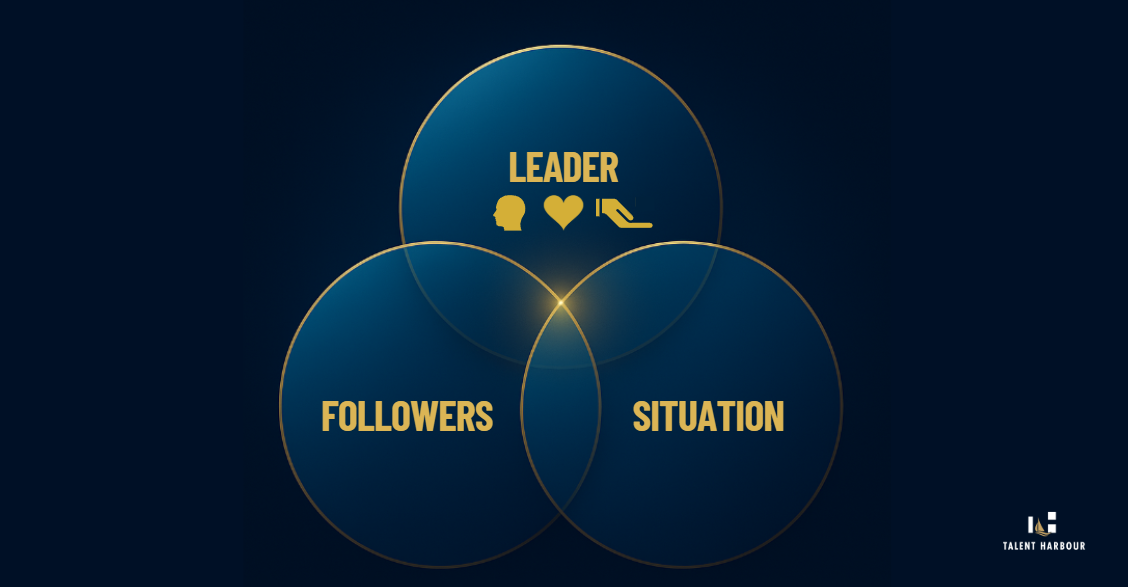
Leadership is the ability to influence people toward a shared vision. And that ability is shaped by three elements working together:
- The Leader: Your skills, personality, and presence.
- The Followers: Their trust, expectations, and motivation.
- The Situation: The context, challenges, and opportunities around you.
This is the Leadership Triad. Great leaders understand that influence only works when these three elements are aligned.
Managers vs. Leaders
Even the most experienced executives can fall into a subtle trap: managing when they should be leading. Both roles are necessary but they serve different purposes.
- Managers focus on structure, processes, and consistency. They keep operations running smoothly.
- Leaders, on the other hand, focus on vision, inspiration, and growth. They help people see what’s possible and move beyond the familiar.
The best leaders know when to switch between the two. Problems arise when leadership becomes only about control or when management becomes too rigid to evolve.
Common Leadership Myths
Even skilled leaders can hold onto outdated ideas about what leadership means. Let’s debunk a few persistent myths:
- Myth 1: Leadership is common sense.
False. Leadership is deeply contextual. What motivates one team might demotivate another. Great leaders adapt their approach to suit people, culture, and circumstance.
- Myth 2: Real leaders are always in charge.
False. The best leaders share power. They know when to guide, when to listen, and when to let others take the lead. Leadership is a shared responsibility, not a solo act.
- Myth 3: Experience automatically makes someone a leader.
False. Experience helps, but reflection and learning turn experience into insight. Without curiosity and openness, experience can harden into habit instead of growth.
- Myth 4: Leaders must have all the answers.
False. The strongest leaders ask better questions. They create space for dialogue, encourage diverse perspectives, and build trust through humility
Head, Heart, and Hands
Leadership today requires balance. The most effective leaders integrate thought, emotion, and action.
Think of Head, Heart, and Hands as a practical framework. -A simple reminder of how to lead with purpose and consistency:
- The Head: Clarity of direction and sound judgment.
- The Heart: Empathy, trust, and psychological safety.
- The Hands: Action, accountability, and follow-through.
When head, heart, and hands work together, leaders create cultures that are grounded, human, and capable of lasting success.