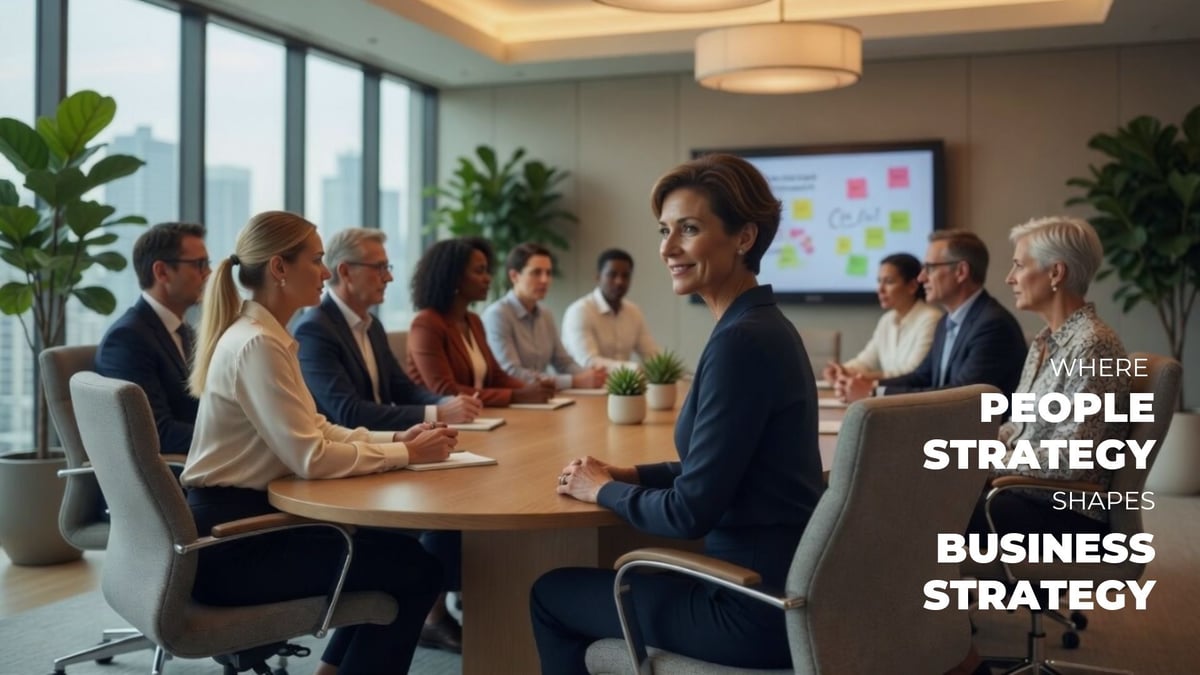
Something has shifted.
Not long ago, HR was often viewed primarily as the function responsible for onboarding, compliance, and employee processes. Important work, certainly, but not always recognised as central to business strategy.
That's changed.
Today, people leadership sits at the heart of some of the most important decisions organisations make: workforce strategy, leadership succession, culture, performance, and reputation. People decisions are no longer operating alongside the business, they are deeply connected to its success.
That evolution is worth acknowledging.
A Shift That's Been Earned
The influence people leadership holds today wasn't created overnight. It has grown through years of thoughtful decision-making, difficult conversations, and the steady ability to guide organisations through change.
HR leaders have helped teams navigate growth, uncertainty, restructuring, and transformation. They've strengthened cultures, supported executives, and created environments where people can perform at their best.
The most forward-thinking organisations are increasingly recognising what strong people leaders have long understood: that decisions about people shape organisational outcomes in profound ways. They influence performance, trust, retention, and long-term sustainability.
What the Role Requires Now
With that influence comes real breadth.
Today's people leaders are expected to think across the full employee lifecycle, from attracting and hiring the right talent, to leadership development, to supporting workforce transitions with care and professionalism. They balance culture and compliance, wellbeing and performance, strategy and execution.
That complexity is part of what makes the role so meaningful. But the strongest leaders in this space also recognise an important truth: effective leadership isn't about carrying everything alone. It's about knowing where to focus expertise and where the right support can create additional value.
Harvard professor Amy Edmondson, whose research on teaming and psychological safety has shaped how the world's leading organisations think about performance, makes a compelling case that the strongest teams are not those that try to handle everything internally. They're the ones where seeking support, building partnerships, and acknowledging the limits of any one person's bandwidth are treated as marks of good leadership, not signs of weakness. That principle is as relevant at the organisational level as it is within any single team.
The leaders who navigate complexity well are often the ones who stay curious, build strong partnerships, and create the right support structures around the work that matters most.
The Organisations That Get This Right
There's a pattern in the organisations that consistently do people leadership well.
Their leaders are clear on what requires their direct attention; the relationships, organisational insight, and judgment that come from being deeply connected to their people and culture. They protect that space intentionally.
And they're equally thoughtful about where external expertise can strengthen outcomes; whether that means finding the right executive, developing leadership capability, supporting employees through a workforce transition, or bringing in senior HR capacity during periods of growth or change.
It's not a reflection of limitation. It's a reflection of strategic thinking.
A Few Questions Worth Reflecting On
Ask yourself:
-
Where is your organisation spending people-leadership energy that could be better supported?
-
Which people decisions currently carry the greatest weight, and do you have the right resources around them?
-
Is your organisation fully positioned to get the best from its people leadership?